

At Sommistore, we often say that rest does not depend on a single element. The mattress plays a central role, but the pillow is the piece that truly defines how the spine settles during the night. When the head is not properly aligned with the neck and back, the body cannot fully relax, leading to discomfort that we often attribute to stress or daily fatigue.
The pillow as a key part of rest
Choosing the right pillow is not a minor or aesthetic issue. It is a decision that directly impacts sleep quality, cervical posture, and how we feel upon waking. That is why we believe it is fundamental to understand how your sleeping position and mattress type influence your choice before making a decision.
Why sleeping position changes everything
Everyone sleeps differently, and that position defines the type of neck support needed. The pillow must complete the work started by the mattress, keeping the head in a natural position without forcing it to tilt upward or letting it sag.
When the height or firmness is incorrect, neck muscles work all night to compensate for that imbalance. The result usually appears in the morning as stiffness, cervical pain, or a persistent feeling of fatigue.
Side sleeping: balance and appropriate filling
Those who sleep on their side need a pillow that fills the space between the shoulder and the head. That gap must be filled evenly so that the spine stays straight from the lumbar region to the neck.
In these cases, we recommend medium to high-profile pillows made of materials that do not collapse easily. The filling must offer constant support, adapt to the body's contours, and return to its original shape when changing positions. A pillow that is too low tilts the neck downward; one that is too soft loses its support during the night.
Back sleeping: support without stiffness
When we sleep on our backs, the goal is to support the natural curvature of the neck without pushing the head forward. The pillow should cradle the neck and allow the head to rest stably, without tension.
For this position, medium-height pillows with balanced firmness work best. The material should adapt gently without sinking completely. A base that is too high creates pressure in the cervical area, while one that is too low forces the neck to overstretch.
Stomach sleeping: less height, more care
Sleeping on your stomach is not the most recommended position, but we know many people rest this way. In these cases, the priority is to reduce neck torsion.
We recommend low-profile pillows with flexible fillings that allow you to turn your head without resistance. The thinner the pillow, the lower the tension accumulated in the cervical area and the upper back.
The relationship between pillow and mattress
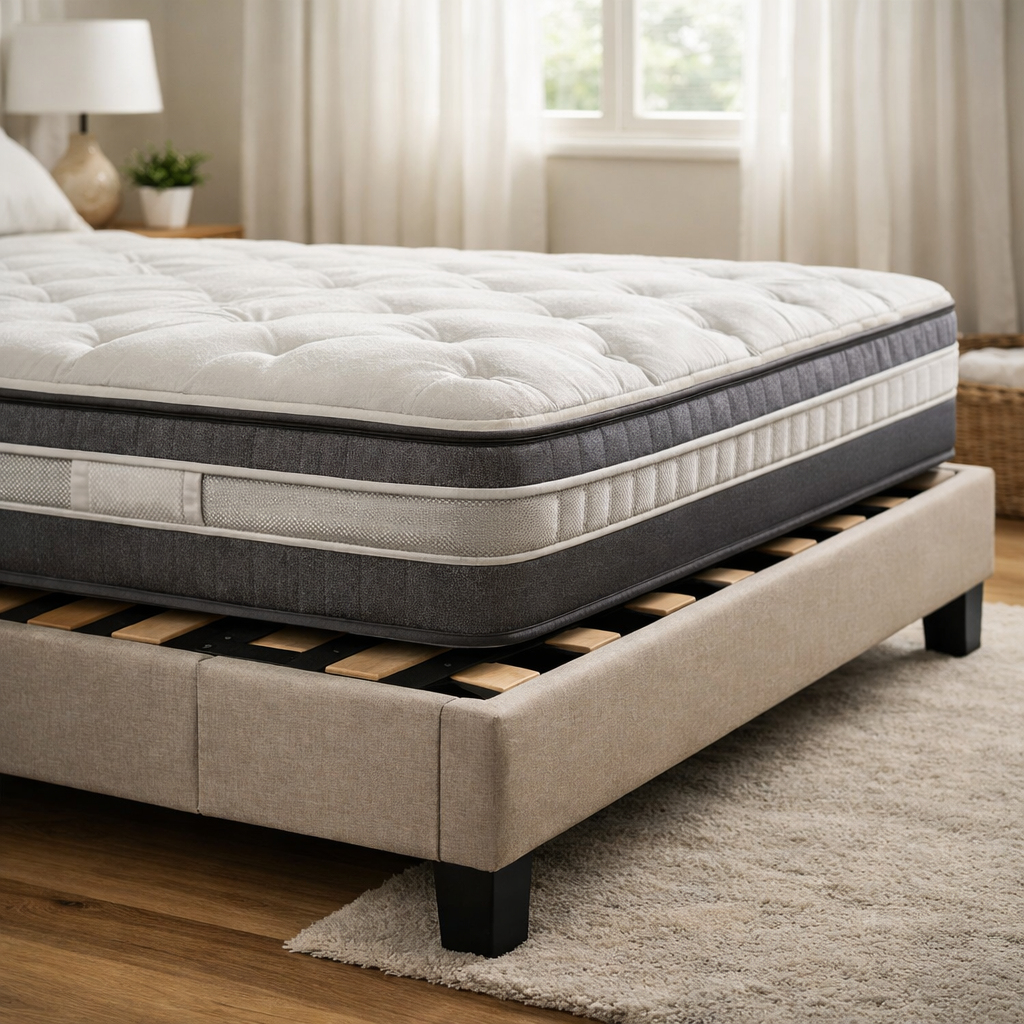
The choice of a pillow cannot be separated from the type of mattress. A firm mattress lifts the body less, while a more adaptable one allows the shoulders and back to sink in a bit more. This difference changes the actual height needed for the pillow.
On mattresses with pocket springs or technical foam layers, the body settles more progressively. In those cases, the pillow must compensate for that sink to maintain proper alignment. On more rigid surfaces, the required height is usually lower.
That is why we always recommend thinking of rest as a complete system, where each element performs a specific function.
Pillow materials and real sensations
Pillows can be made with different fillings, each offering a different experience. It is not about choosing the "trendy" material, but the one that best responds to your sleeping position and your mattress.
Memory foam pillows adapt to the contour of the neck and maintain a stable shape throughout the night. They are ideal for those seeking constant support and less movement. Latex options offer elasticity and ventilation with a more reactive feel. Fiber fillings allow for more manual adjustment, although they usually require more maintenance to retain their shape.
Signs that your pillow is no longer doing its job
Often we change our mattress and continue using the same pillow for years. However, this item also has a limited lifespan.
If you wake up with stiffness in your neck, pain in your shoulders, or the need to adjust your pillow several times a night, it has likely lost its ability to provide support. When the filling flattens, shifts, or fails to recover its shape, it ceases to fulfill its primary function.
The importance of hygiene and replacement
Beyond support, the pillow influences the hygiene of your rest. Over time, it accumulates moisture, sweat residue, and particles that affect the feeling of freshness. Keeping covers clean helps, but there comes a time when replacement is necessary.
Checking the condition of your pillow every so often is a simple way to improve your rest without making major changes. Many discomforts disappear simply by renewing this item.
Conscious choices improve rest
At Sommistore, we believe a good pillow is not chosen at random. It is defined by your posture, your mattress, and your body's actual needs. When these factors align, the neck relaxes, the back rests, and sleep becomes deeper.
Sleeping well does not depend on a single product, but on how each part of the system works together. That is why we support those looking to improve their rest with clear information and conscious decisions.
Pillows and covers available at Sommistore
If you notice while reading these signs that your pillow is no longer supporting you as it once did, or that the cover has lost its freshness, you can find options at Sommistore designed to improve your rest. We offer quality pillows and covers designed to provide support, durability, and real comfort. Renewing these items is a simple step that can make a big difference in how we sleep and how we start each day.


Leave a comment
This site is protected by hCaptcha and the hCaptcha Privacy Policy and Terms of Service apply.