

Rest has evolved from a biological habit into a scientific and technological field of study. In recent years, artificial intelligence (AI) has become a key tool for understanding how we sleep, identifying behavioral patterns, and developing products that optimize sleep quality.
Technology and innovation in modern rest
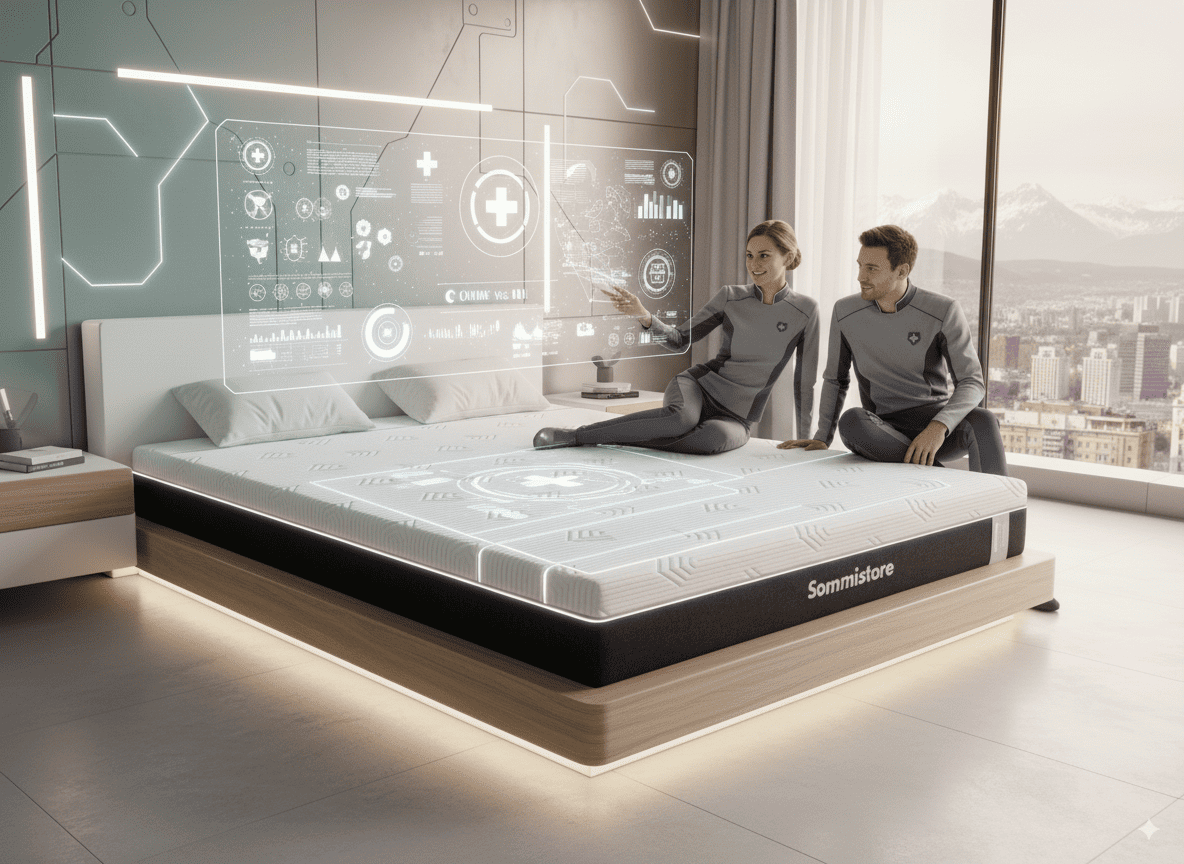
Advances in AI allow for the analysis of variables such as movement, body temperature, and respiratory rate to determine the efficiency of rest. This data is transformed into design parameters that inspire new materials and support configurations. At Sommistore, we have products that apply this, such as the integration of adaptive foams, pocket springs, and smart ventilation layers that behave like a natural response system to the user's needs.
The science behind personalization
One of AI's major contributions to the world of rest is personalization. Each person has a different way of sleeping, and algorithms help define the balance between firmness, elasticity, and ideal temperature.
Inspired by this concept, our Sommistore mattresses offer combinations of materials that replicate this adaptive behavior without requiring sensors or electronic devices.
AI and technology for better sleep
Currently, there are AI algorithms that provide data on sleep disorders, facilitating the early detection of conditions such as sleep apnea and insomnia.
On the other hand, there are digital tools like Ensodata that work with a large amount of data (environmental, laboratory, and clinical), process it, and provide conclusions with possible patterns in sleep disturbances.
It is also known that mattresses are being created with integrated thermostats, certain sensors, and lighting systems that enhance the experience of better sleep.
Artificial intelligence and posture correction for rest
In recent years, research centers like the Massachusetts Institute of Technology (MIT) have generated devices that help study the positions people use when they sleep.
These are wireless devices equipped with sensors that activate during the night and offer precise data on your sleep without the need for cables. This allows us to know that there are positions, such as sleeping face down, that can increase the risk of sudden death in epileptic patients, and to reveal symptoms of Parkinson's and Alzheimer's, which are noticeable when analyzing the quality of rest.
Artificial intelligence does not replace comfort; it enhances it. Thanks to technological research, rest becomes a more precise, balanced, and human experience.


Leave a comment
This site is protected by hCaptcha and the hCaptcha Privacy Policy and Terms of Service apply.