

Have you ever gone to bed exhausted but your mind wouldn't stop? Or woken up at 3 a.m. with thoughts about work? You're not alone. Stress and sleep have a two-way relationship: stress ruins rest, and lack of rest amplifies stress. Breaking that cycle is possible, but first, you have to understand what is happening in your body.
What stress does to your nervous system
When you perceive a threat, real or imaginary, your brain activates the hypothalamic-pituitary-adrenal axis and releases cortisol, the stress hormone. Cortisol is useful in dangerous situations: it speeds up your heart, increases alertness, and postpones "non-urgent" functions like digestion or sleep.
The problem is that the modern brain doesn't distinguish well between a real predator and an important presentation tomorrow. Both situations trigger the same physiological response. And elevated cortisol at bedtime is the number one enemy of deep rest.
Sleep stages that stress destroys first
Sleep has four stages that repeat in 90-minute cycles. Stages 3 and 4, known as deep or slow-wave sleep, are the most restorative for the body. REM sleep, on the other hand, is crucial for memory and emotional balance.
Elevated cortisol drastically reduces the time you spend in deep stages and disrupts REM. The result is that you sleep for hours but don't rest: you wake up tired, irritable, and with less ability to concentrate.
Furthermore, chronic stress can cause micro-awakenings that you don't even remember, fragmenting the cycles and preventing you from ever achieving restorative rest.
Signs that stress is affecting your sleep
It's not always obvious. Some signs are direct: it takes you more than 30 minutes to fall asleep, you wake up repeatedly, or your first thought upon waking is worry.
Other signs are more subtle: you have very vivid and disturbing dreams, you grind your teeth at night (bruxism), or you have the feeling of having slept lightly even if you didn't wake up.
Persistent fatigue that doesn't improve with more hours in bed is also a sign, as it indicates that sleep quality is low regardless of the quantity.
Science-backed strategies
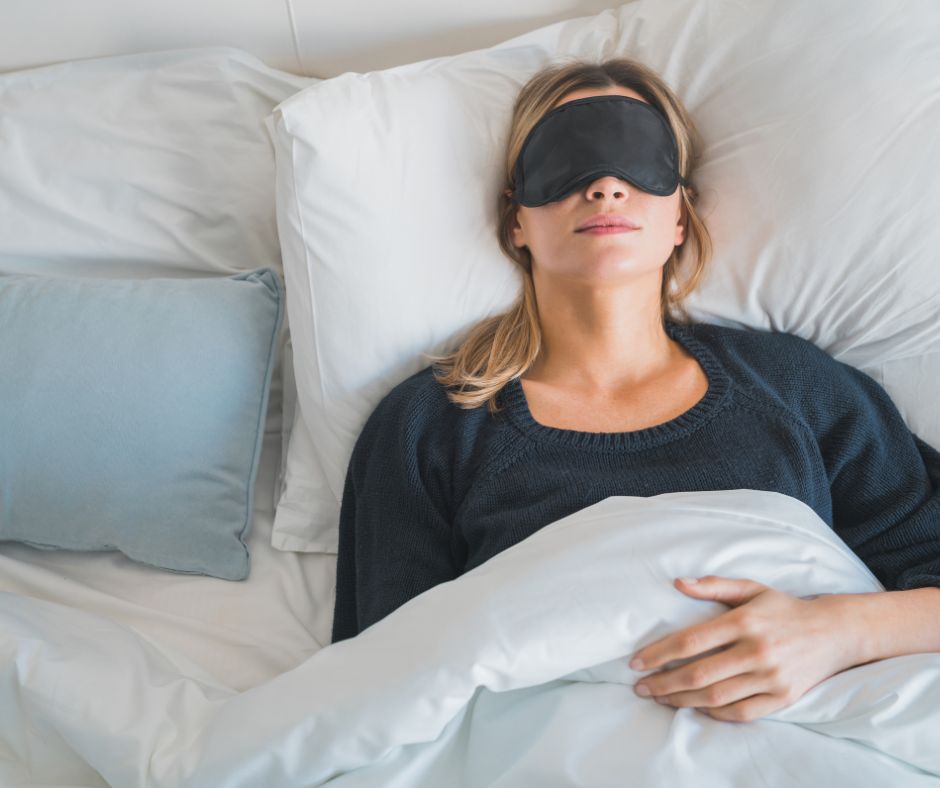
Sleep hygiene is the first step: regular bedtimes and wake-up times, no screens at least 30 minutes before sleep, and a dark and cool environment.
Progressive muscle relaxation and diaphragmatic breathing (inhale for 4 seconds, hold for 4, exhale for 6) activate the parasympathetic nervous system, the opposite of alarm mode. Practicing them 10 minutes before bed reduces heart rate and cortisol.
Evening journaling also helps: writing down three things that went well during the day and tomorrow's pending tasks "unloads" the mind and reduces nighttime rumination.
For cases of chronic stress, cognitive-behavioral therapy for insomnia (CBT-I) is the treatment with the most scientific evidence, more effective long-term than medication.
The role of your sleep environment
An optimal environment doesn't eliminate stress, but it reduces barriers to rest. The ideal bedroom temperature is between 17 and 20 degrees Celsius. Total darkness promotes melatonin production. Noise can be blocked with earplugs or white noise.
Your mattress also matters: if you experience physical discomfort while trying to relax, it is another stimulus that keeps your nervous system active. A mattress that supports you correctly eliminates that variable and facilitates the transition into deep rest.
Stress is part of modern life. But learning to manage it before bed can make a huge difference in how you feel each morning.


Leave a comment
This site is protected by hCaptcha and the hCaptcha Privacy Policy and Terms of Service apply.