
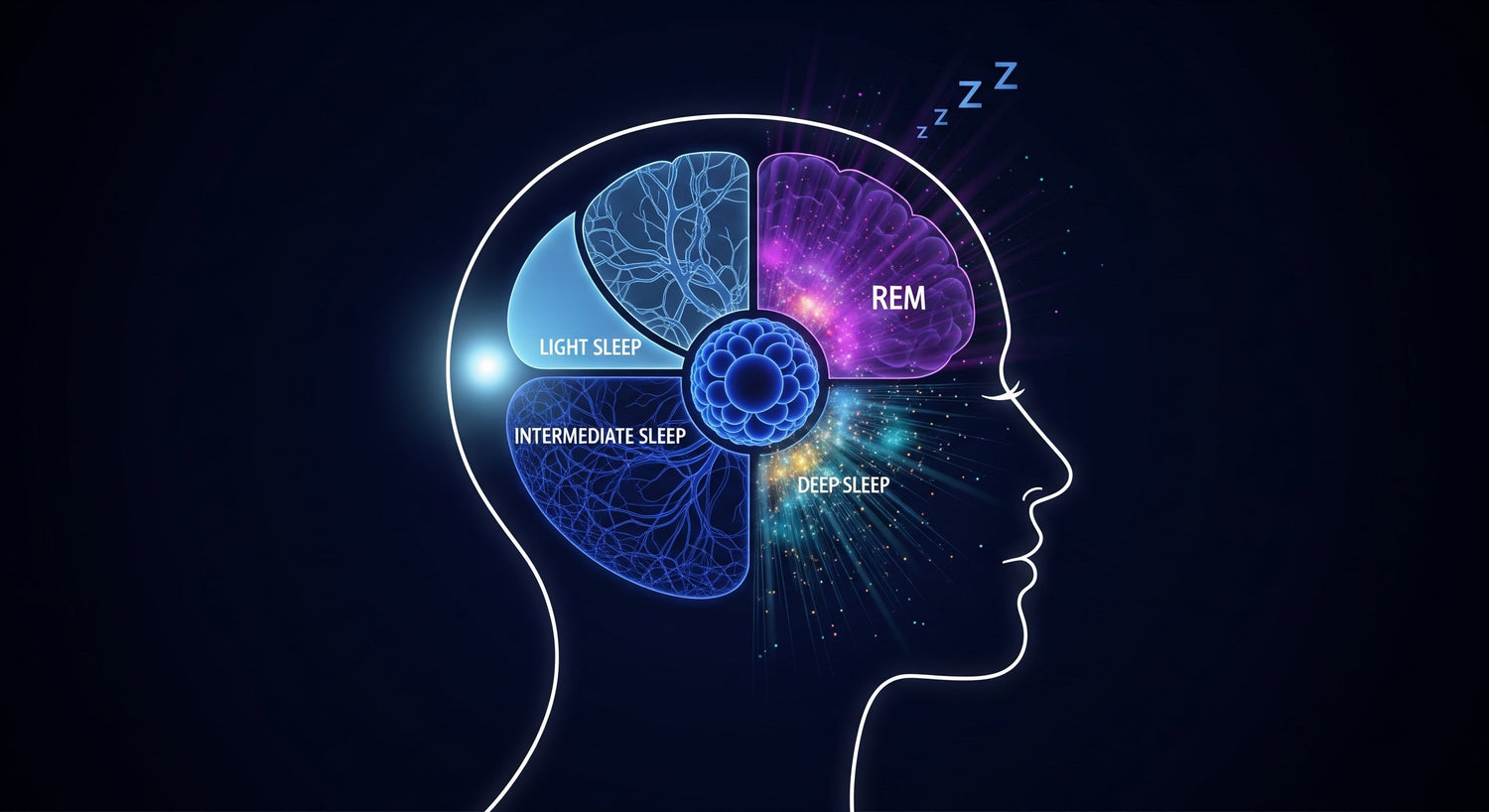
The nightly mystery that renews us
Every night, when we close our eyes, we surrender to an apparent void, a silent interlude between a day that ends and another that awaits. But far from being a simple pause, that period of stillness is the setting for one of the most complex and fundamental processes for our existence.
While our body rests, the brain embarks on an extraordinary journey, a nocturnal odyssey orchestrated in several acts that determines our health, our mood, and our capacity to face the world.
Understanding this journey is not just an exercise in curiosity; it is the first step to truly transforming the quality of our rest and, therefore, of our life.
The threshold of rest: the N1 phase or light sleep
The descent begins subtly. It is that familiar moment in which consciousness fades, thoughts become fragmented, and the sounds of the environment begin to dissipate.
This first stage, known as N1, is the portal to the universe of sleep. Our heart and respiratory rates slow down, muscles begin to relax, and brain waves, previously fast and active, begin a transition toward a slower rhythm.
It is a fragile state, a shallow sleep from which it is very easy to wake up. We could compare it to the moment a ship releases its moorings from the dock; it is still near the shore, but it has already begun its voyage toward deeper waters. It lasts only a few minutes, but its function as a transition is absolutely crucial.
Deepening the journey: the N2 phase and sensory disconnection
Once the initial threshold is crossed, we enter the second station: the N2 phase. Here we spend approximately half of our total rest time. The body deepens its state of relaxation and body temperature drops slightly. Brain activity becomes more complex, presenting brief and powerful electrical bursts known as "sleep spindles" and "K-complexes."
Far from being random, these bursts of activity are guardians of our rest, sophisticated mechanisms that protect us from external stimuli, such as a noise or a change in light, to prevent us from waking up.
During this phase, the brain works diligently, consolidating memories, processing information, and filtering the relevant from the trivial. It is the great organizer of our memory, where the experiences of the day begin to find their permanent place. Uninterrupted rest during this stage is fundamental for learning and skill retention.
The heart of the night: the N3 phase or deep sleep
If the previous stages were the journey, the N3 phase is the main destination. This is deep sleep, the body's true repair shop. Reaching this depth is vital, as this is where our organism regenerates at a cellular level.
Brain waves become extremely slow and broad, known as delta waves. Waking someone in this phase is a difficult task, and if successful, the person will feel disoriented and groggy for several minutes.
During this critical period, the body releases growth hormone, essential for repairing tissues, building muscle, and strengthening the immune system. It is physical and mental detoxification, the moment when the body performs its heaviest maintenance. For this restorative process to occur without a hitch, it is essential to have a surface that offers unwavering support, allowing the muscles to release all tension.
The stage for dreams: the REM phase and emotional restoration
After the descent into the depths of slow sleep, a paradoxical and fascinating stage emerges: the REM (Rapid Eye Movement) phase. Our brain lights up with activity almost identical to being awake.
Breathing and heart rate become irregular, and our eyes move rapidly under closed eyelids. However, our body remains almost completely paralyzed, an ingenious safety mechanism that prevents us from physically acting out our dreams. Because it is here, in the theater of the REM phase, where the most vivid and memorable dream narratives are projected.
This stage is fundamental for emotional regulation, creativity, and problem-solving. It is as if our mind processes the day's conflicts, archives emotions, and prepares us for a new emotional beginning.
The architecture of the night and its impact on your well-being
This four-phase cycle does not happen just once. Throughout a full night, we go through this sequence between four and five times, in cycles that last approximately 90 to 110 minutes. However, the composition of each cycle changes as the night progresses. During the first few hours, deep sleep (N3) phases predominate, prioritizing physical restoration.
Toward dawn, the REM phases become longer, focusing on mental and emotional consolidation. Interrupting these cycles, whether due to an uncomfortable mattress or bad habits, means robbing our body and mind of the opportunity to complete their essential work.
The feeling of waking up tired, even after having slept for many hours, is usually an indication that this delicate nocturnal architecture has been altered. Ensuring uninterrupted sleep is, therefore, the key to successfully navigating all the stages and waking up feeling genuinely renewed.


Leave a comment
This site is protected by hCaptcha and the hCaptcha Privacy Policy and Terms of Service apply.