
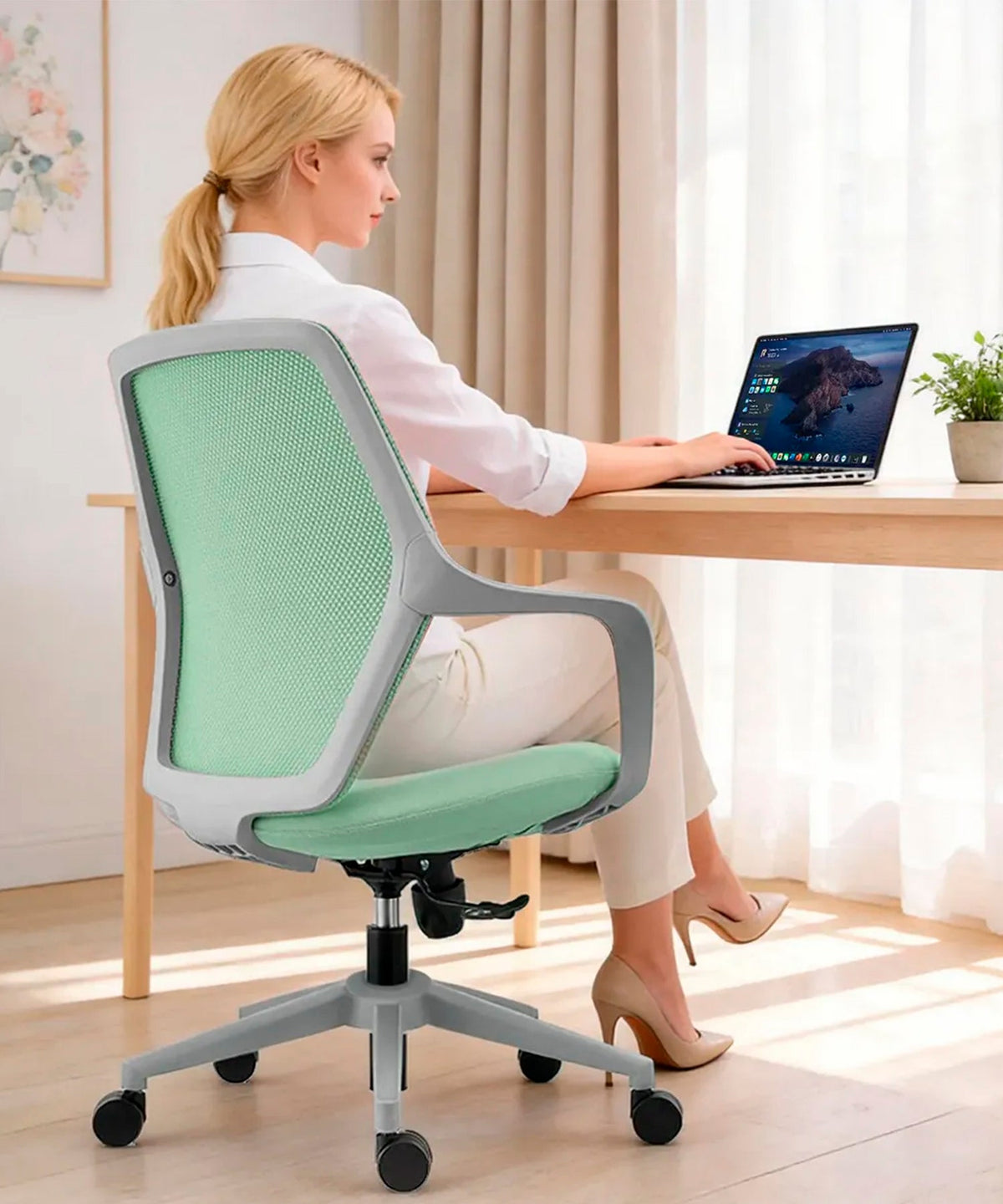
When we talk about rest, we usually only think of the night: the mattress, the bed base, the pillow. But the body accumulates tension long before you rest your head on the pillowcase. If you spend several hours of the day sitting in front of a computer, the chair you choose directly dictates how you will sleep that night and how you will feel when you wake up the next day.
Why daytime posture also determines how you sleep at night
The back does not distinguish between “working hours” and “rest hours”: it is the same spine that supports a workday and then needs to relax on the mattress. When a chair forces you to hunch your shoulders or strain your neck for hours, that tension doesn't disappear when you turn off the computer. It travels to bed in the form of muscle tightness, lower back pain, or difficulty finding a comfortable position. At Sommistore® we have already discussed this hidden link between your mattress and your daily productivity, and the relationship works both ways: you sleep better when you sit better, and you perform better when you rest better.
What to look for before choosing an ergonomic chair
Not all chairs labeled “ergonomic” meet the bare minimum requirements. Before buying, it is worth checking three specific aspects.
Seat height and depth
The seat should allow your feet to rest completely on the floor and your knees to be at a similar height to your hips. Excessive depth forces you to sit on the edge, losing lumbar support; one that is too short leaves your thighs without support.
Adjustable lumbar support
The natural curve of the lower back needs a backrest that supports it, not one that flattens it. Models with height and depth-adjustable lumbar support adapt to different bodies, which is especially valuable if the chair is shared between several people in the home.
Armrests and headrest
Adjustable armrests prevent your shoulders from bearing the weight of your arms for hours, while a headrest reduces cervical tension during long days in front of the screen. Neither is a luxury: they are the details that make the difference between ending the day feeling light or with a stiff neck.
Ergonomic chairs and mattresses: two decisions that go hand in hand
Those who have already gone through the process of choosing the right mattress know the importance of thinking of the body as a complete system. The same applies to home furniture: a well-chosen ergonomic chair complements the work a quality mattress does at night, closing the circle between active daytime rest and deep nighttime sleep. If you notice that daily stress is taking a toll on your sleep quality, it is worth first reviewing how you spend your sitting hours before looking for the cause solely in your bed.
How to keep your chair in good condition over the years
An ergonomic chair is a medium-term investment, and like any investment in rest, it requires maintenance. It is advisable to check the tilt mechanism every so often, adjust the height according to the rest of the furniture in the room or desk, and avoid overloading it with objects not intended for that space. If the home office shares a room with the bedroom, keeping the area tidy with a nearby dresser or chest of drawers helps the chair maintain its primary function without becoming an improvised coat rack.
Frequently asked questions
Does an ergonomic chair replace the need to get up and walk?
No. No chair, no matter how complete it is, replaces active breaks. The ideal is to combine correct posture with breaks every 45 to 60 minutes to stretch your legs and back.
What is the relationship between a bad chair and back pain when sleeping?
The tension accumulated during the day in the shoulders, lumbar region, and cervicals does not release automatically when lying down. If that tension is already chronic, neither the most suitable mattress nor bed base can fully compensate for it; that is why it is best to tackle the problem from both fronts.
Can the same chair be used for the whole family?
Yes, provided it has adjustable height, seat depth, and lumbar support. The more adjustable the model, the better it adapts to different body types and heights.
When should you replace an office chair?
When the backrest has lost firmness, the height mechanism fails, or you notice you are constantly adjusting yourself, looking for a position that you previously found naturally. These are signals equivalent to those indicating that a mattress has reached the end of its cycle.
The next step for your holistic rest
If your day combines long working hours with nights that don't quite feel restorative, starting with the chair may be the change you were missing. Discover our selection of ergonomic chairs at Sommistore® and schedule your visit to our showroom in Montevideo to test the rest of our rest offerings in person, including mattresses and bed bases.



Leave a comment
This site is protected by hCaptcha and the hCaptcha Privacy Policy and Terms of Service apply.